Impact

Climate, competitiveness, and inclusion — one investment thesis.

We believe that industrial transformation and climate resilience are not in tension — they are the same investment. Every company we back delivers financial returns and measurable impact across jobs, emissions, and regional development.
10–11
Portfolio Companies
5,000+
Direct Jobs Targeted
50,000+
tCO₂e / Year Avoided
40%
Women-Led or Beneficiary
SDG Alignment

Aligned with 9 Sustainable Development Goals.

SDG 5 — Gender EqualityGender Equality
SDG 6 — Clean WaterClean Water
SDG 7 — Clean EnergyClean Energy
SDG 8 — Decent WorkDecent Work
SDG 9 — Industry & InnovationIndustry & Innovation
SDG 10 — Reduced InequalitiesReduced Inequalities
SDG 12 — Responsible ConsumptionResponsible Consumption
SDG 13 — Climate ActionClimate Action
SDG 15 — Life on LandLife on Land
Strategic Alignment

Aligned with the EU Global Gateway & Africa's climate transition agenda.

OGIC 4.0's impact framework is directly aligned with the EU Global Gateway's objectives for sub-Saharan Africa: net-zero emissions by 2050, quality job creation, and women's economic empowerment. Our portfolio is designed to be reportable against SFDR Article 9 criteria and compatible with DFI impact measurement standards (HIPSO, IFC Performance Standards).

Impact Goals

Seven goals. One integrated impact thesis.

Industry decarbonization West Africa
01

Industry Decarbonization & Value Chain Strengthening

Accelerating the green transformation of West Africa's industrial base — making local industry more competitive, lower-carbon, and more deeply integrated into regional value chains.

Key Indicators
CO₂ emissions avoided (tCO₂e/year)
Carbon footprint reduction per portfolio company
Revenue growth of investees
Jobs created across value chains
Market access opened for local producers
Emergence of a structured middle class

Women's Empowerment & Climate Resilience

Promoting women entrepreneurs and securing income streams to guarantee their resilience in the face of climate change — from contract farming to cooperative financing.

Key Indicators
Increase in women's income over 5 years
Growth in contract value for female farmers
Improved agricultural yields for women-led cooperatives
Access to structured financing for women
Securing fixed and long-term income streams
Market access for women-owned processing units
Women farmers cooperative agriculture Africa
02
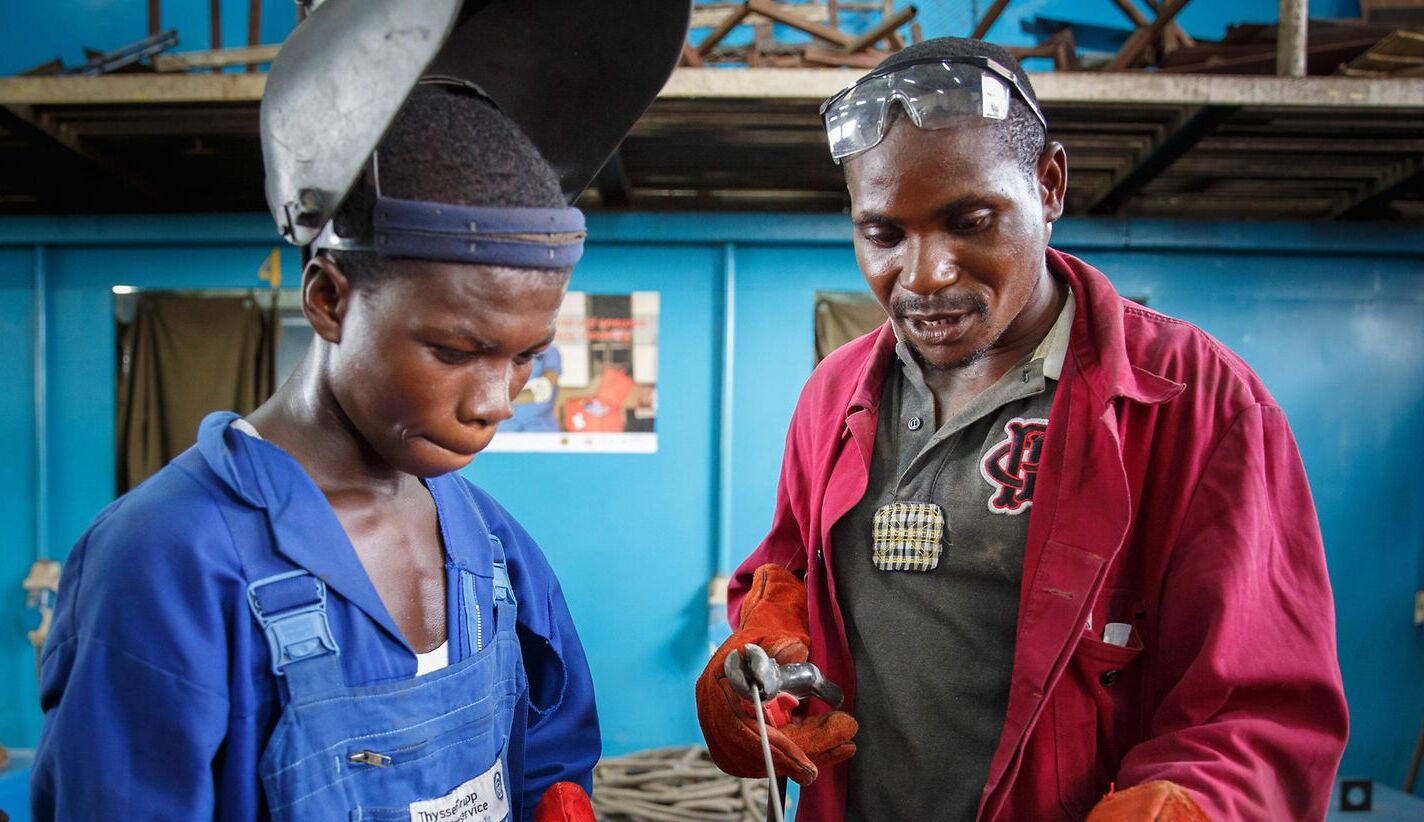
Technical training vocational skills workers
03

Decent Jobs & Skills Development

Creating quality employment and training opportunities at scale — addressing youth unemployment, reducing illegal migration, and building a skilled industrial workforce.

Key Indicators
Number of direct and indirect jobs created
Share of jobs in rural and peri-urban areas
Technical and vocational training programs supported
Youth employment rate in portfolio companies
Reduction of informal employment in target sectors
Women's share of new employment

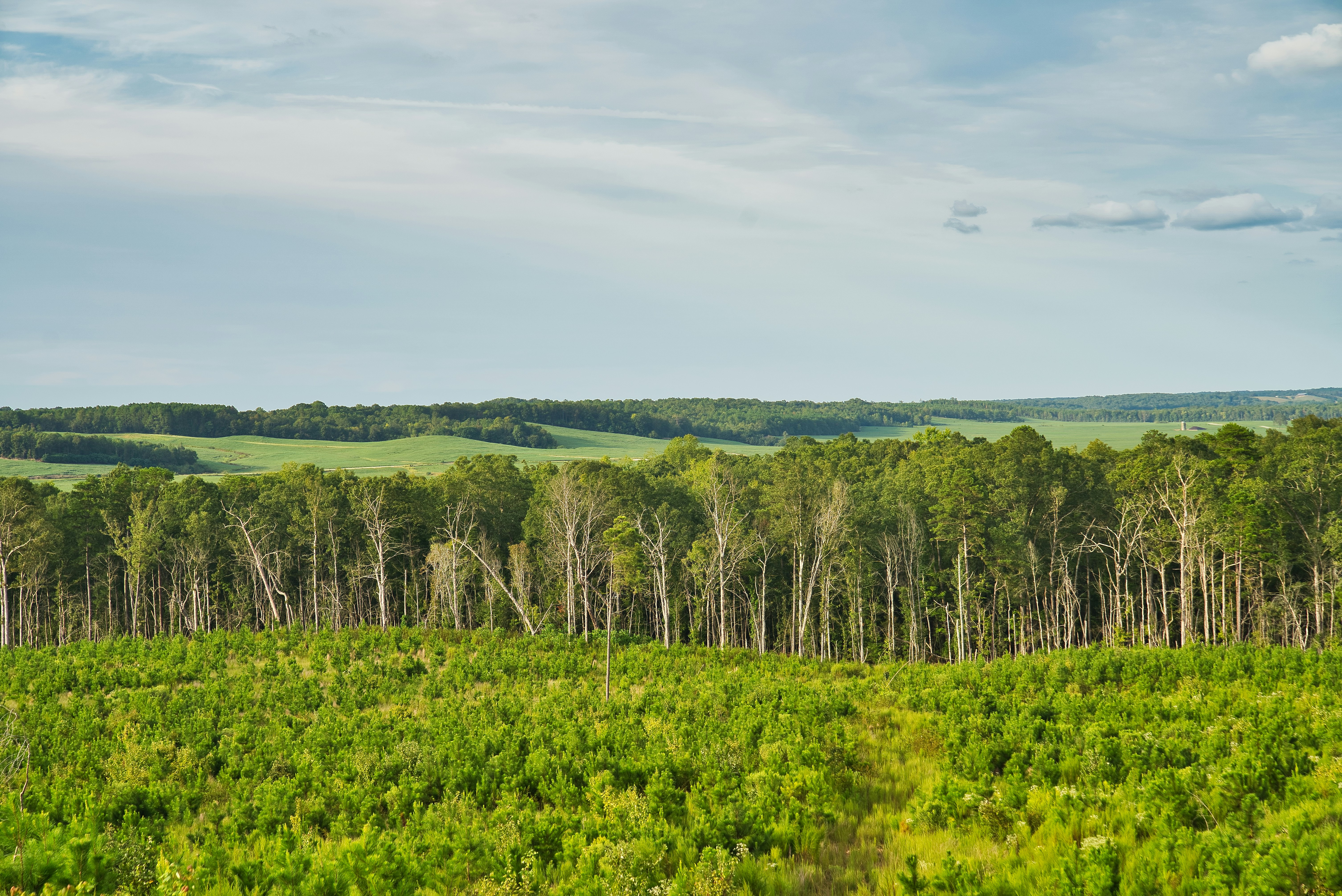
Climate-Resilient Agriculture & Agroforestry

Financing agribusiness and agroforestry models that strengthen food security, preserve biodiversity, and build long-term resilience against climate shocks.

Key Indicators
Quantity of food secured from climate hazards
Biodiversity preservation through agroforestry
Food self-sufficiency improvement in target regions
Climate resilience of supported farming systems
Reduction of post-harvest losses
Adoption of climate-smart agriculture practices
Agroforestry landscape agriculture green fields
04
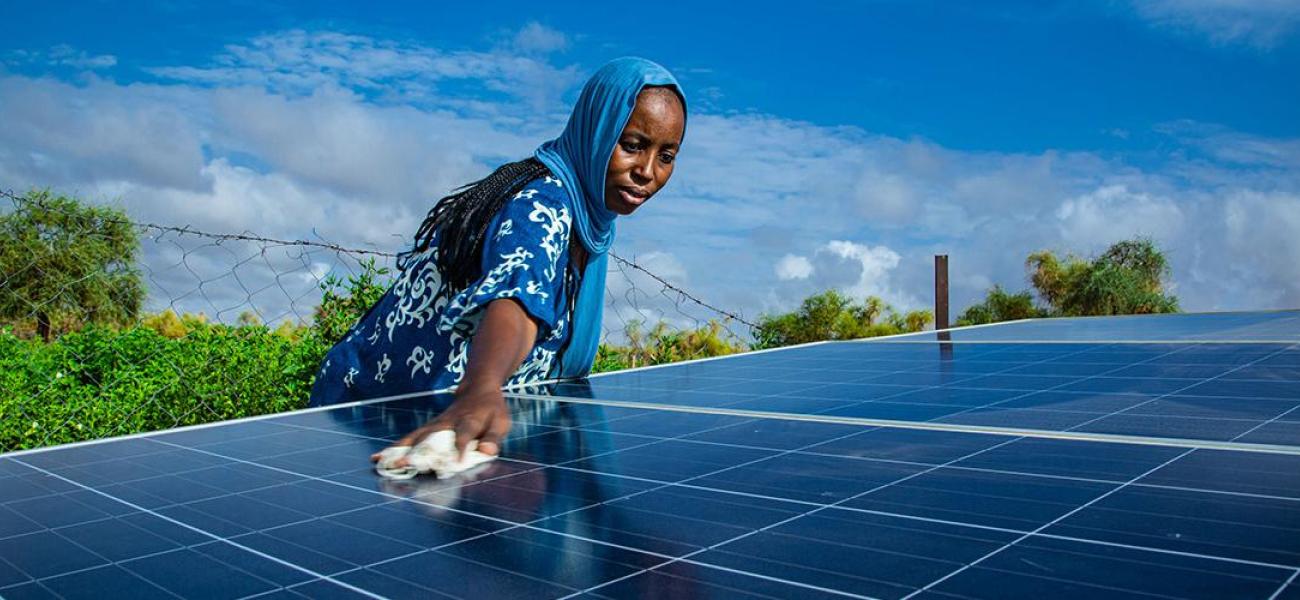
Solar panels renewable energy Africa
05

Clean Energy Access & Deployment

Replacing diesel generators with solar and hybrid systems — reducing energy costs, cutting emissions, and improving reliability for agriculture, logistics, and light industry.

Key Indicators
MW of clean energy capacity installed
Energy cost reduction for investees (%)
Diesel generators replaced by solar/hybrid systems
Share of renewables in productive sectors
tCO₂e avoided through energy substitution
Improved energy reliability index

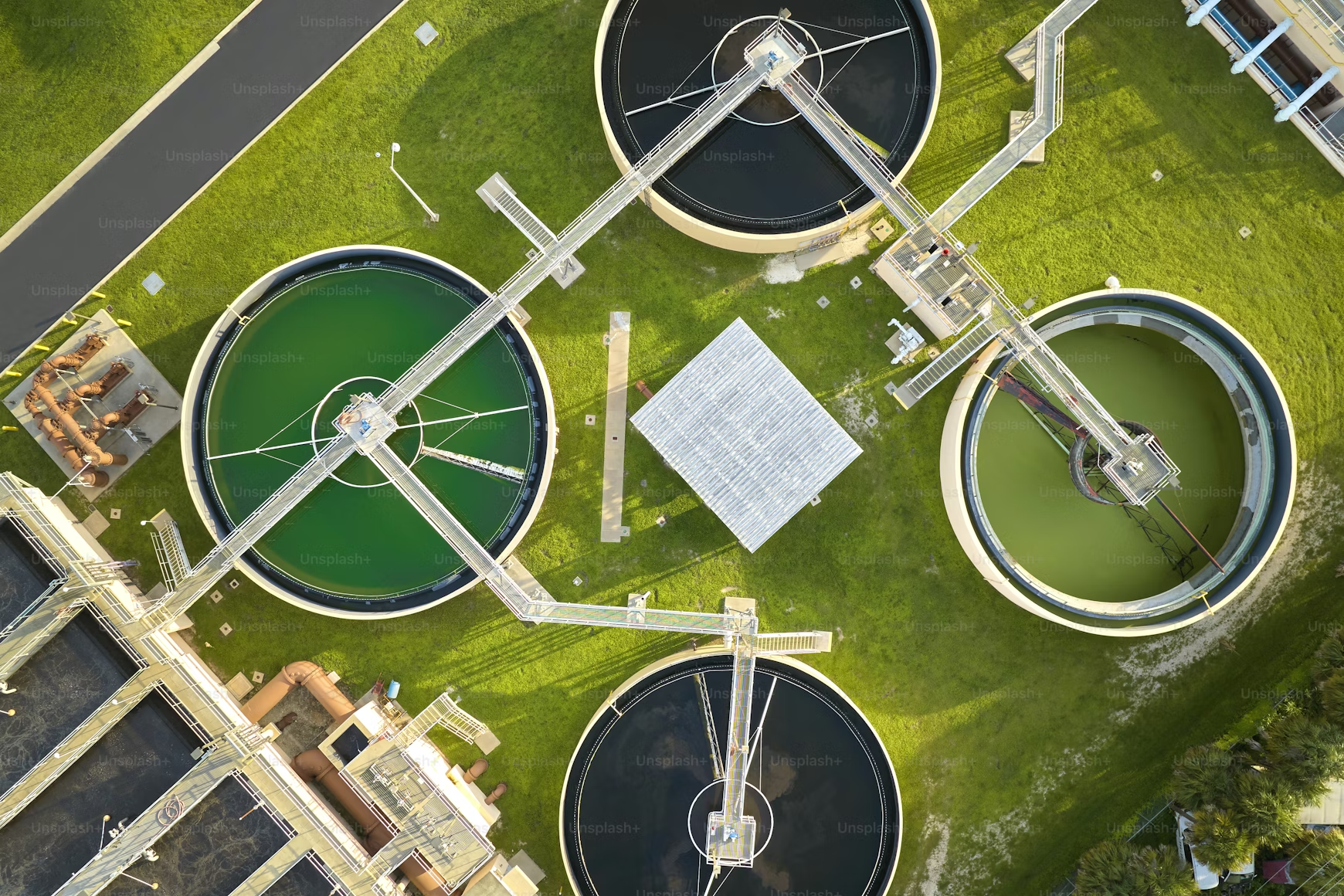
Water Efficiency & Sanitation

Deploying water purification, efficient irrigation, and industrial wastewater management — protecting a resource that is both a climate vulnerability and a competitive asset.

Key Indicators
Water consumption reduction through optimised irrigation
Deployment of filtration and treatment solutions
Reduction of industrial water pollution
Water recycling and reuse rates
Protection of boreholes and water infrastructure
Resilience of agro-systems in water-stressed regions
Irrigation water agriculture fields
06
Precision agriculture technology farming
07

Agritech & Precision Farming

Applying digital tools, sensors, and data-driven decision-making to improve yields under climate stress — turning agricultural waste into value and reducing input costs.

Key Indicators
Improved soil health and climate-informed decisions
Yield improvement under climate stress (%)
Reduction of chemical inputs through precision agriculture
Conversion of agricultural waste into energy or value-added products
Enhanced food security for supported farming systems
Digital tools adopted per portfolio company
Impact Measurement

How we measure, report, and improve.

Baseline at entry

Each investee undergoes an impact diagnostic at the time of investment — establishing baseline metrics across emissions, employment, and gender inclusion.

Annual portfolio review

Annual impact data collected from all portfolio companies, benchmarked against HIPSO indicators and IFC Performance Standards. Reported to all LPs.

Exit impact assessment

At exit, a full impact assessment measures cumulative jobs created, emissions avoided, and women's income improved against the original baseline.